The principals of Positive Liberty have at last restarted with a new blog, "The One Best Way (No, Really)" at http://theonebestway.wordpress.com/. Despite our eagerness to get our blog restarted, there were the typical coordination problems of busy people, and there are few posts as of yet (although Jon Rowe is moving fast, at least).
A lot of enthusiasm, energy, and momentum was lost during the recurring technical problems at PL, but we are committed to continuing to blog together, and I'm sure in good time we'll be going great guns again.


14 June 2010
Me in the Marines?
No, but I am going to the Marine Corps Officer Educator's Workshop next week. They're flying me to Virginia, and I'll watch potential officers go through their training. Specifically, they're young folks whose summer job is going through Marine Corps training, but without having to make a commitment to the Corps. They can do this for two or three (I think) years, and then they are given the option of committing to the Corps after graduating college. If they do, they go to an abbreviated OCS and become officers. If they don't, they part ways amicably and owe the Marines nothing.
The recruiting officer who nominated me for the program said the great majority who go through the program do commit to the Marines, but the Corps isn't interested in making the commit prior to that, because they only want those who really want to make a real commitment.
I'm looking forward to observing their training program and learning more about the history of the Marines. I'm not sure, but I think I'm going to be at Quantico. That's where the National Museum of the Marine Corps is, which has the flag that was raised on Iwo Jima both of them, actually).
Sometimes I'm amazed at the opportunities that come my way.
The recruiting officer who nominated me for the program said the great majority who go through the program do commit to the Marines, but the Corps isn't interested in making the commit prior to that, because they only want those who really want to make a real commitment.
I'm looking forward to observing their training program and learning more about the history of the Marines. I'm not sure, but I think I'm going to be at Quantico. That's where the National Museum of the Marine Corps is, which has the flag that was raised on Iwo Jima both of them, actually).
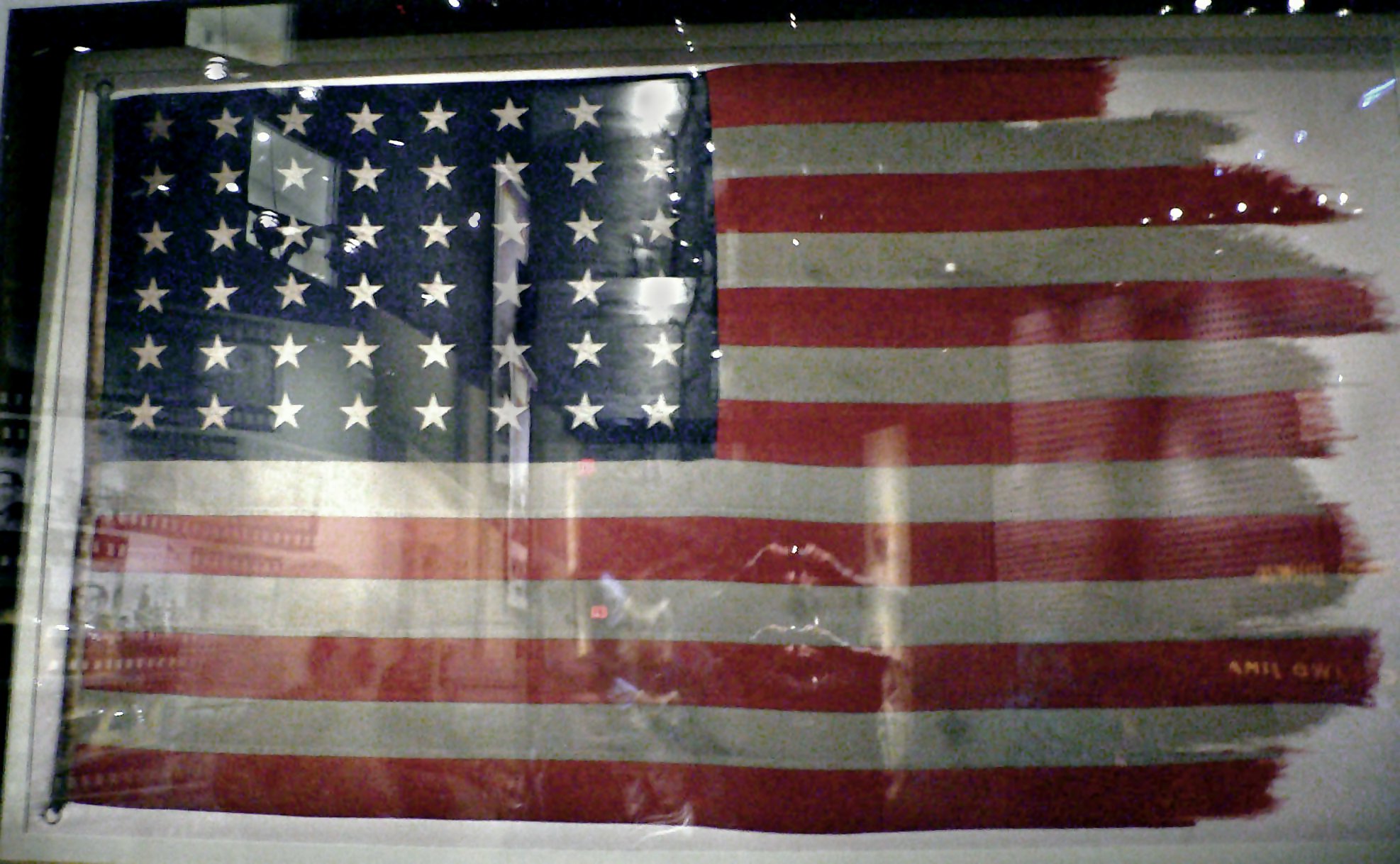
Sometimes I'm amazed at the opportunities that come my way.
09 June 2010
The Continuing Saga of Philip J. Berg (Esquire!)
Over at obamacrimes.com, lawyer Philip J. Berg (Esquire!*) continues to beg for the public's attention, this time by announcing that "by and through" he himself, "WE THE PEOPLE"** are sponsoring "OBAMA BIRTH CERTIFICATE / ELIGIBILITY/ OBAMACARE March on Washington." Not just "a" march, but the march. Unfortunately, "We the People," don't seem that interested in actually participating in this thing we're supposedly sponsoring "by and through" Mr. Berg.
Hey, I know this here march against Barry Soetero Obama Hitler Chavez thing is important, but you didn't expect me to give up my Memorial Day cookout and the Co-Cola 600, now, did you?
When "We the People" do get off their couch-potato asses to march on Warshington, Berg has a special request.
That would be your original long-form vault copy birth certificate, by god. If this "march" (shuffle, perhaps, is more like it) ever gets off the ground, I'd be tempted to go just so I could go around to individuals demanding to see their birth certificates, then insisting upon seeing their original sealed vault copy.
--------
* This "Esquire" business of lawyers bugs me to no end. My Environmental Law teacher at Cal State Bakersfield was a recent law school graduate who had not passed the bar, so he couldn't cal himself esquire. But he could, and did, get a license plate for his car that read, "esqr2be." Pathetic plumping for praise, it seemed to me. I have a Ph.D., which took twice as long to get as a JD, yet I don't insist upon people calling me "Doctor Hanley," nor do I ever--ever--refer to myself as "James Hanley, Ph.D."
** I'm one of "We the People" by the way, and nobody ever asked for my sponsorship. Perhaps I should sue Mr. Berg for dishonestly listing me as a sponsor of his miniscule-men march?
Due to scheduling conflicts and the importance of this March, the date of the OBAMA BIRTH CERTIFICATE / ELIGIBILITY/ OBAMACARE March on Washington was postponed from Memorial Day Weekend to sometime in August / September 2010.
Hey, I know this here march against Barry Soetero Obama Hitler Chavez thing is important, but you didn't expect me to give up my Memorial Day cookout and the Co-Cola 600, now, did you?
When "We the People" do get off their couch-potato asses to march on Warshington, Berg has a special request.
All individuals participating are requested to bring a copy of their Birth Certificate.
That would be your original long-form vault copy birth certificate, by god. If this "march" (shuffle, perhaps, is more like it) ever gets off the ground, I'd be tempted to go just so I could go around to individuals demanding to see their birth certificates, then insisting upon seeing their original sealed vault copy.
--------
* This "Esquire" business of lawyers bugs me to no end. My Environmental Law teacher at Cal State Bakersfield was a recent law school graduate who had not passed the bar, so he couldn't cal himself esquire. But he could, and did, get a license plate for his car that read, "esqr2be." Pathetic plumping for praise, it seemed to me. I have a Ph.D., which took twice as long to get as a JD, yet I don't insist upon people calling me "Doctor Hanley," nor do I ever--ever--refer to myself as "James Hanley, Ph.D."
** I'm one of "We the People" by the way, and nobody ever asked for my sponsorship. Perhaps I should sue Mr. Berg for dishonestly listing me as a sponsor of his miniscule-men march?
28 May 2010
The Death of Positive Liberty Redux
Positive Liberty has died again, and this time I believe it's for good. We've been having some technical difficulties that repeatedly make our site inaccessible, and no one can figure out what the problem is. However we're sticking together and planning to regroup under a completely new name. I'll keep you posted.
24 May 2010
The Prince, Chapter 11: Ecclesiastical Principalities
The Prince chapter 11: "Concerning Ecclesiastical Principalities"*
This chapter concludes Machiavelli's discussion of different types of states, and from the modern perspective it is a curiously mixed affair, in equal parts thoroughly medieval and wholly modern, while simultaneously being as clear a statement of Machiavelli's adoration of strong leadership.
Substantively the chapter is about the recent rise of the Church to real political power, through the talents of the Borgian Pope, Alexander VI, (discussed in chapter 7), and how enthralling and admirable Machiavelli finds him. There's nothing new there, so substantively this chapter contributes almost nothing to the book.
Medievalism in Machiavelli
But the medievalism of Machiavelli's thought comes in his opening remarks on ecclesiastical states, which--astonishingly--are the only ones which "can be maintained without either" good fortune or leadership ability,
17 May 2010
The Prince, chapter 10: How the Strength of States Should Be Measured
The Prince chapter 10: "How the Strength of all States Should Be Measured"
In this very short chapter, Machiavelli makes a single claim, that the strength of a state should be measured solely by its ability to defend itself. There is no doubt that were tBill and Ted to go back in time and bring Machiavelli to the present day, that he would be a staunch realist in foreign policy. And I’m enough of one that I largely agree with his claim.
There are, of course, other ways to measure power. One of the best definitions of power is the ability to get others to want to do what you want them to do.* And in recent years the issue of “soft power.” But ultimately, the most crucial ability, which relates directly to what may be the only definitively legitimate justification for the state, is the ability to defend your state and society from invasion. Everything else is nice, but not crucial, and primarily matters only to the extent it helps defend your own state.
Next Week: Chapter 11: "Ecclesiastical Principalities."
.
* Unfortunately I can’t remember the source, but it might have been Richard Neustadt’s Presidential Power.
05 April 2010
The Prince, part 9 (chapter 9)
The Prince chapter 9: “Of the Civic Principality"
Fortune, Ability, and the Civic Prince
If anyone has thought that it was the aristocratic class of men that Machiavelli admired, rather than the strong individual, this chapter sufficiently dispels that error. Here his disdain for the aristocracy is displayed plainly; that is, without excess, adornment, excuse or vitriol, but in the most straightforward and off-hand manner.
At the beginning he makes a curious distinction between civic principalities and the more “traditional” principalities he has previously been discussing, when he argues that the civic principality cannot be achieved “either wholly through ability or wholly through fortune, but rather through shrewdness assisted by luck.”* I take this to mean that because the civic prince depends upon the political support of others, ability alone cannot enable one to rise to that station, as it’s not simply a matter of will and good decision-making. But luck—or fortune—alone is also insufficient, because this is not a case of having one good connection (such as a father/pope) who can put you into power; the support of too many is needed to rely on luck alone. So ability is necessary but
22 March 2010
The Prince, Part 8 (Chapter 8)
The Prince chapter 8: “Of Those Who Have Attained the Position of Prince by Villiany"
Ol’ Nick, to refer to our author by his demonic nickname, finds villainy* somewhat problematic, but not terribly so. His appraisal seems to lie more in how one applies villainy, rather than whether one is a villain or not. As he’s shown before, his concern seems to be with outcome rather than method. The praiseworthy outcome is maintaining control over one’s territory, and method is judged by how well it promotes that end. Because villainy, properly used, contributes to maintaining the principality, Machiavelli cannot simply condemn it, but because done badly it makes it impossible to maintain one’s position, he cannot simply condone it either.
An example makes clear what Machiavelli means by villainy:
21 March 2010
The Prince, Part 7 (Chapter 7)
The Prince chapter 7: Of New Dominions Acquired by the Power of Others or by Fortune."
This chapter, in any normally partitioned work, would not be separate from the prior one. Chapter 6 discussed dominions won both by one’s own ability and via the powers of others, with examples of the former. This chapter discusses the same thing, but with examples of the latter. The structure is somewhat unusual, but it works well, at least for me.*
However this particular chapter doesn’t work.
The Prince, Part 6 (Chapter 6)
The Prince, Chapter 6, "Of New Dominions Which Have Been Acquired By One's Own Arms and Ability."*
Today we come to a change in focus, essentially a new section, in The Prince. The first 5 chapters focused on the different types of principalities and how they can be established and held. The answer to the last question seems to be, "ruthlessly wipe out every possible claimant to princehood. In this new section Machiavelli focuses not so much, as the title of this chapter would lead one to believe, on the new dominion/territory itself, but on the person who has acquired it, and the means of acquiring it. In this chapter the focus is on acquiring territory through one's own skill, chapter 7 is about acquiring territory through luck or through the assistance of the real conquerors, chapter 8 is about acquiring territory through "villiany," chapter 9 discusses those coming to power though "the favour of his fellow citizens" in a civic principality, 10 is a sidestep to compare the strength of different types of principalities, 11 discusses ecclesiastical principalities, and that completes the second section (as I would divide it, anyway), because after that he changes focus to discuss different types of armies.
Today we come to a change in focus, essentially a new section, in The Prince. The first 5 chapters focused on the different types of principalities and how they can be established and held. The answer to the last question seems to be, "ruthlessly wipe out every possible claimant to princehood. In this new section Machiavelli focuses not so much, as the title of this chapter would lead one to believe, on the new dominion/territory itself, but on the person who has acquired it, and the means of acquiring it. In this chapter the focus is on acquiring territory through one's own skill, chapter 7 is about acquiring territory through luck or through the assistance of the real conquerors, chapter 8 is about acquiring territory through "villiany," chapter 9 discusses those coming to power though "the favour of his fellow citizens" in a civic principality, 10 is a sidestep to compare the strength of different types of principalities, 11 discusses ecclesiastical principalities, and that completes the second section (as I would divide it, anyway), because after that he changes focus to discuss different types of armies.
Subscribe to:
Posts (Atom)